Years ago I wrote a post on anger. This post is a distillation of that article along with a few additional thoughts.
Boundaries or Volcanoes
Anger is an incredibly important emotion. Yes, anger is important. It can also be destructive when it’s too explosive. Here’s a good rule of thumb: Anger that draws healthy boundaries is good. Anger that attempts to destroy is bad.
If we find ourselves in a position where our anger is so charged that we want to explode outward without reflection or consideration of the consequences, then we need to immediately pause, turn inward, and hold that anger. Containing that anger (not repressing) is going to be the first step in achieving freedom from it.
In my first post on anger, I recommended Thich Nhat Hanh’s Anger. I still think this is one of the best books to read when it comes to emotional work. Holding any emotion kindly is the way to dissolve and integrate the charge.
That said, there are times that we need to draw boundaries or have a difficult conversation. We cannot merely turn inward and hope to avoid all difficult conversations. (I’ve tried this—it doesn’t work.) But we need to first reach a place where the emotional charge isn’t overwhelming. That’s the difference between responding and reacting. Reacting means exploding outward. Responding means moving from integrated anger.
Responding or Reacting
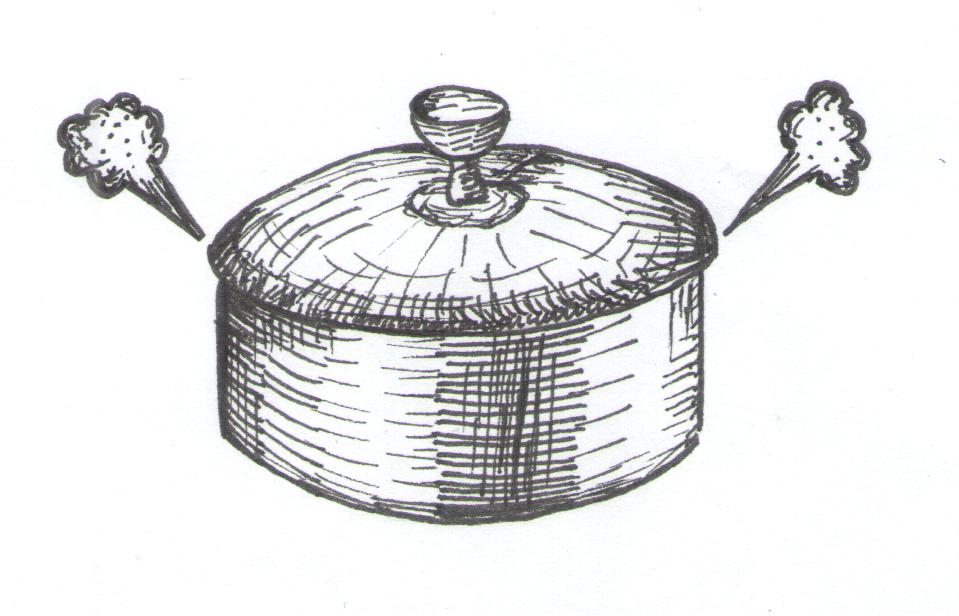
How do we know if we are responding or reacting? This is not so easy to answer because it requires self-awareness and will depend on the situation. But here’s a principle that will help: When you’re triggered by explosive anger, cook the anger for a few hours. Cooking it means being present with whatever sensations arise in the body. Be with the anger for at least an hour before you respond. If you can wait a few days before having that difficult conversation, even better.
Cooking the anger means being with the discomfort in the body. It can also mean identifying those ideas (or beliefs) that are most destructive. Something to ask repeatedly: “What’s the worst thing about this?” Importantly, there is nuance when it comes to uncovering difficult emotions: Going into endless mental loops is not the point. Making contact with the hurt—that is the point.
Anger and Trauma
If we are burdened with a hefty dose of childhood trauma, then we might find that we are too explosive at times. The other extreme is being too passive—we become a walkover or a doormat.
Both extremes are undesirable. And they can be two sides of the same coin.
When we aren’t able to have difficult conversations (respond from integrated anger), we tend to let things build (react by repressing the anger). We expect the other party to one day realise that they’ve been treating us unfairly. Yet, this never happens. We have festering anger that builds. One day, this anger becomes too much and we explode.
This is how passivity turns into explosiveness.
Being able to have difficult conversations within a reasonable time frame is such an important principle that it is discussed in 12 Step work. I believe AA’s 12 Steps to be a deeply spiritual programme that can benefit anyone who applies the principles, not just alcoholics.
Those relationships in which we can have difficult conversations are usually our best. Those in which we are unable to have a difficult conversation will either remain superficial or fade away.
Of course, it isn’t always the case that explosiveness will stem from repeated slights. Explosive anger can also stem from a wound or a faulty belief. Whatever the case, if we have unprocessed trauma, we have to be very intentional about our integration work. Bring awareness to both passivity and explosiveness. It will also serve us to know that if we suffered Big T trauma, integration work might take years.
Integrating Anger Is Hard
I’ve found that integrating anger is one of the most difficult things to do. Anger that stems from Big T trauma will radiate to the arms and legs. It is incredibly hard to contain and integrate. But it is a way to move beyond the destructive parts of ourselves.
Anger and Creative Energy
Anger, once it’s integrated, frees up energy and creative flow. This is something to look forward to. From an energetic standpoint, repressed emotions weigh us down, emotionally and physically. It takes energy to keep repressed emotions repressed. But once these emotions are integrated, the energy is liberated.
If you have a big creative project that you want to bring into existence, but for some reason just can’t seem to get off the ground, ask yourself: Do I have repressed anger?
Explosive Anger Doesn’t Change Things
Explosive anger doesn’t change things on a fundamental level. I was made aware of this little truth in a dream. We might think that an emotional outburst will change someone’s mind or get our point across—but it never shifts the energetics of the situation or relationship.
An outburst might shift something for a short period of time. But really, we want to break the outburst-guilt cycle. We want to respond in a fashion that changes the situation on a fundamental level. We want our anger to work with us, not against us.