Over the years I’ve been bombarded with countless ideas concerning writing and publishing—often from people who don’t even read. Publishing is an area where many people feel that they have a great amount of knowledge, expertise, and magic formulas. I take all of it with a grain of salt. The best course of action is determined by inner knowing—not outer noise.
I wanted to write this article for anyone who is interested in writing, publishing or self-publishing. That said, take all publishing advice with a grain of salt. This rule absolutely applies to me too.
In this article, I will discuss my own thinking around publishing, what I found useful, and what I consider a healthy mindset concerning writing and finishing books. You might agree with some of it. You might disagree. You might find that some ideas are useful and others don’t align with your goals. It’s perfectly reasonable that not everything in this article will apply to you—but if you are thinking of self-publishing a book, you might very well find a few useful nuggets in this article.
Filter Advice. Stay True To Yourself
Filter advice. Not everyone will have something worthwhile to contribute to your writing journey. Some people will be very critical. Others will offer a lot of ideas, but it might be worthwhile to take one afternoon to clarify your own goals.
I filter all publishing advice through the lens of my own intentions. This also applies to advice from authors who are published. This is because I’ve become particularly intentional about my writing journey. Creative freedom is my top priority. I therefore no longer care for boxes, trends, and what sells. I no longer write for agents or publishers. I write the stories that excite me. That’s all.
My sense is this: If you’re going to spend a year writing a story, tell the damn story you want to tell.
Clarify Your Goals
I touched on this idea in the previous section, but it should be expanded on.
It makes sense to ask a few questions about the book (and/or fiction) you’re writing. It makes sense to at least have a basic idea of the audience that you want to reach.
For instance, with Chasing the Sun, I wanted to reach sci-fi readers who like world-building and technologies that are carefully considered and plausible. That’s the sort of sci-fi that I like to read. But it’s also the sort of sci-fi that requires more effort from both reader and writer in terms of attention. Also, people who favour plot over prose will not like my writing. To me, both are important. Character even more so. That’s it.
My goal with my non-fiction is different—but that’s a topic for another article.
Now, your intentions might be that you want to write a memoir because you had an interesting life. Or you might want to write a romance. Or maybe a book about birds. Whatever the case, it’s a good idea to clarify your goals.
Here are some questions that might be helpful:
- What sort of stories excite me?
- What are some of my favourite books?
- If I can only write one book in my life, what would that be?
Concerning the last question: No one is saying that you should only write one book. But the question is helpful because it helps you to focus your efforts. It is easier than ever to be distracted. Information is everywhere. I have countless ideas for books. But finishing projects is hard. It’s much better to work on one or two things at a time. That last question forces one to focus.
The following sections contain some case studies of self-published books. There are many different ways to go about self-publishing. My only advice would be to not spend a fortune on anything in particular at the start. Be pragmatic.
Case Study 1 – A family history book
Many years ago, when I participated in a writer’s group, I met a fellow writer who self-published a book by printing copies through a local printing company. She did most of the work herself. Friends and family helped with some of it—editing, fact checking, etc.
The book essentially documented the lives of her mother and grandmother. It was mostly going to be of interest to her family, in particular her grandchildren. Her goal was not to make money from the endeavour. It was an attempt to come to terms with a difficult family history. She only printed fifty copies and shared it without asking money in return. She gifted me a book because I thought her fiction was impressive.
The book was basically a personal creative project. I wondered if it was worth it to spend so much time on something that only a few grandchildren will read. But what I later realised is that writing is never wasted; it cultivates growth and skills. More importantly, the book was a stepping stone to great prose. There were only a handful of people in the writer’s group who could really write. This lady was one of them.
Case Study 2 – Faarland
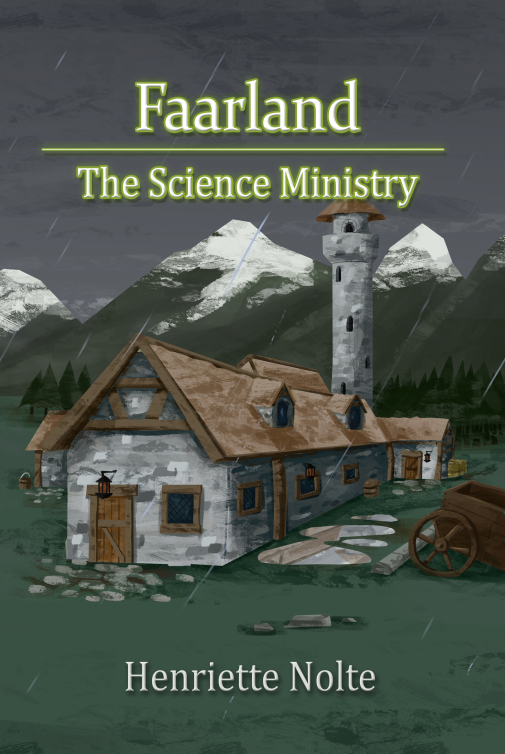
In 2017 I sent out a sci-fi manuscript to countless agents and got completely ignored. The experience was brutal not because I got ignored, but because I’d written and rewritten that story three times over. I went into a writing slump for some months after that.
After a few months of wallowing, I started working on Faarland. This was a story that I wanted to self-publish because my previous manuscript was nearly 100 000 words and I wanted to write something shorter. I also wanted to learn something about self-publishing.
I published Faarland – The Science Ministry on Amazon Kindle in 2018. This was the first part of a two-part fantasy story. I then printed some physical copies of the book because I wanted to promote it at Geekfest. Faarland – The Flying Machine was published on Kindle later that year, but I never printed it.
After Geekfest, I realised that my efforts might be better focused online. Spending my entire weekend trying to sell books to drunk teenagers proved too much of a challenge, even for me. Admittedly, there might be better festivals for book selling. But I felt like an utter failure after that weekend. I only sold fifteen books! The stalls next to mine nearly sold out in stock. Turns out that books do not sell like games and custom clocks. Fifteen books? Actually, not so bad for books. But not so great compared to everything else.
The festival was a slog, but I learnt a few invaluable things that I will share.
If you do decide to print physical books, don’t print two-hundred books like I did. I still have stacks of Faarlands in my cupboard. And I’ve not had the will to do another festival. Unless you plan to do countless festivals, don’t print 200 books. Print fifty or maybe a hundred.
I printed Faarland through a local printing (not publishing) company. It cost around R45 (45 ZAR) for each book. I sold it for R150. People did not complain about the price of the book. Many felt that it was actually quite cheap. Today, I might get away with a higher price, but keep in mind, Faarland – The Science Ministry is a novella of around 150 pages. In other words, it’s not a full length novel. (The Complete Edition can be viewed as a full length novel though.)
If you print more books, each unit costs slightly less. You might save R2 per book, but trust me, it’s not worth it. Do a small print run. If you sell out, you can always do another print run. Unless you are planning to do a lot of festivals just print fifty books or less.
Another reason why less is better: you can change supplier if you are not happy with the end product. I wanted Faarland to look like a book that you would find in a bookstore—not something home-made. I didn’t quite achieve that.
Also keep in mind that if you print physical books, you need an ISBN number. This is easy to obtain but it is an additional step for physical copies. I used an artist for both Faarland covers. This was money well spent, but it’s not necessary. If your budget is tight, you can make your own cover.
Case Study 3 – The Distance Home
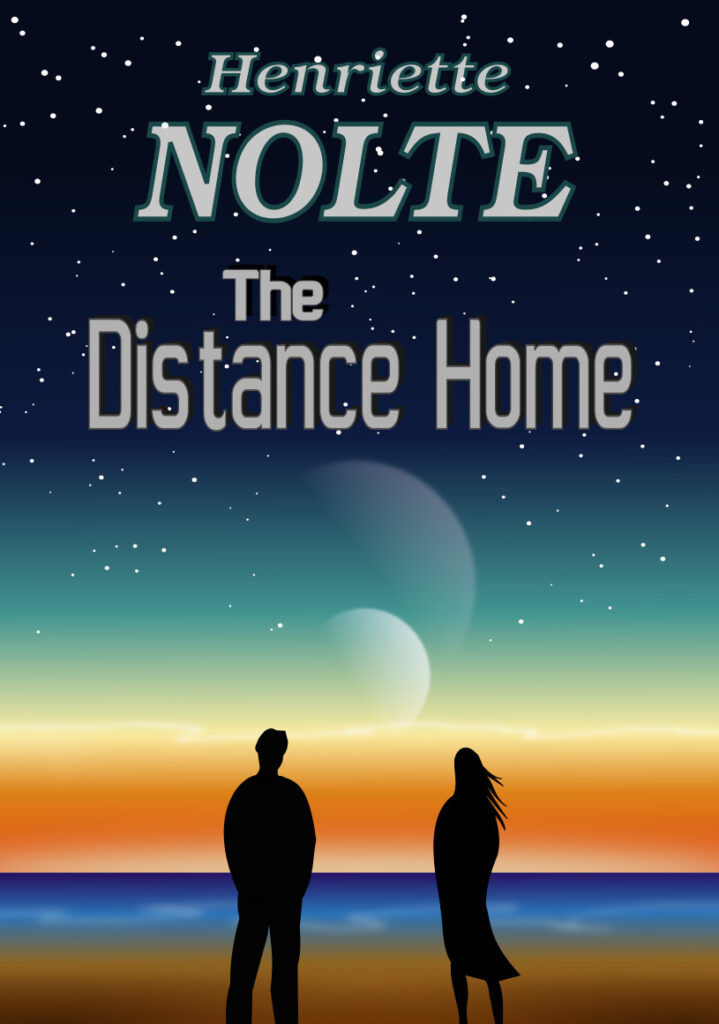
The Distance Home is only available in electronic format on Amazon Kindle. I will probably never print physical copies of that story. It was something short that I wanted to self-publish because I’d finished a longer story before that point.
Short fiction is perfect for self-publishing. Traditional publishers aren’t interested in short fiction—meaning anything between 1000 to 40 000 words. (The Distance Home was around 7000 words.) There are some exceptions to this. Sometimes a publisher will publish a collection of short stories by established authors. Naomi Novik’s Buried Deep is an example of this. That said, if you aren’t an established author, no traditional publisher will publish your collection of short stories. Never say never—but chances are close to zero.
So, self-publishing is perfect for short fiction.
Publishing Platforms
I’ve published most of my books on Amazon Kindle.
Years ago, I published Tarmage City on Smashwords as an experiment. I still want to re-edit it so I never link to the story. Smashwords was later acquired by Draft2Digital. I’ve not had a chance to set up on Draft2Digital because, well, I only have so much time.
The disadvantage of having your work exclusively on Amazon Kindle is that someone with, say, a Kobo e-reader will not be able to read your work. I personally also think monopolies aren’t good. Big organisations don’t always take users, readers and writers into account.
Draft2Digital only takes 10% of your royalties. That’s amazing!
Consider this: A regular crime novelist in South Africa will only see about 5% or less of the shelf-price of a book. That’s really small. These figures aren’t exact and some authors negotiate other deals, but the point is that not many people are making money with traditional publishing. Even people that have a couple of published books aren’t really making money. Deon Meyer is a well-known exception to this. But his books are translated into many other languages. His sales stretches far beyond the small Afrikaans market.
It’s true that not many people are making money with self-publishing—but the royalties per book are much higher. Self-publishing can be much more lucrative. But it takes time. In any case you might want to give it a try.
What are some of the advantages of publishing on Amazon Kindle? People have easy access to your book. People can read your work risk free while you can get paid per page read. Again, there really aren’t any downsides to self-publishing except that you might find it’s hard to get people to read your work. That’s all.
It’s Hard To Sell Books
I don’t know if you’ve noticed, but people don’t read all that much. Most people don’t finish one book per year. Additionally, most people will much rather read a mystery or romance than a strange sci-fi from some unknown author. That’s okay too. But I always encourage people to read more. They don’t even have to read my books.
But why read? Because reading develops you as a person. Wanting people to read more is, to some extent, a selfish aim. I want to live in a world where people can think, focus, and solve problems. But that is a rant for another post.
The fact that it’s hard to sell books is part of the equation. This is why it is so imperative to write the stories that you want to write. If the book gets heavily criticised by a friend, you might feel bad for a while. But you will eventually realise that you are immensely proud of that work. Not every opinion out there needs to be taken to heart.
Writer’s Groups
Writer’s groups are of little value if you want to write better. In my view, the best way to improve is to spend an enormous amount of time writing and reading. That is not to say that one cannot get inspiration, ideas, and encouragement from fellow writers. You can. But you might also find that fellow writers can be jealous and competitive.
So beware. Writer’s groups can derail you from your own writing goals. People have all sorts of opinions on what to do to finish books and how to get published—all the while never finishing one flash fiction story. Focus on finishing stories, not the opinions of others.
Back when I was desperate for a publishing deal, I would often feel deflated about my writing journey. I had one goal: getting a book published by a reputable publishing house. I saw a published book as the ultimate prize—the ultimate mountain top. I have since realised that writing is the north star—not getting published.
If you’re in it for the long haul, build your writing journey on internal satisfaction—not the opinions of others. The former is a rock solid foundation that can withstand enormous difficulty and turbulence. The latter is a flimsy foundation of sand.
Magic Formulas
I attended one of Miranda Sherry’s book signings years ago. Sherry’s a brilliant South African author who could not get published locally, but landed a well-known UK agent eventually. During the signing, one person asked how she managed to ‘land Ollie’. She was very graceful in her reply—but I was slightly offended by the question. It assumed that she’d followed some magic formula to get published. I knew this wasn’t the case because I’d read her first book. She got published because she was a great writer—not because she followed magic formulas.
Some Thoughts On Quality
Self-publishing doesn’t have a great reputation. Many people believe that if you are self-published you (probably) slapped together a substandard manuscript and popped that onto the internet. Additionally, people also believe that if you’re traditionally published you have the stamp of approval from highly literate and important people.
Both of these things can be true—but things are often much more nuanced in real life.
Traditionally published books do go through rigorous editing and proofreading. This is why most books in bookshops are of an impeccable standard. But it’s deceptive to generalise. Some books that have reputable agents and publishing houses are poor.
Back in the day when I was still searching for agents, I read countless (fairly unknown) authors who were represented by reputable (well-known) agents. If an agent was interested in sci-fi, I would read at least one book from an author that they represented. I chose books that loosely fell into the same category as my manuscript.
Some novels would start off great. The initial 10 000 words would be tight and interesting. But then, I would notice a sharp drop in quality. Sometimes very noticeably after the first 10 000 words, other times around midway.
Why was there such a drop in quality after the first 10 000 words? Agents often decide whether or not to represent someone based on the first 10 000 words of a novel. My guess is that many authors wrote and rewrote the initial 10% of the story only to land an agent.
So, it’s possible to find traditionally published work that is utter garbage. And it is possible to find great stories that are self-published. Hugh Howey’s Wool is a well-known example of this. I personally enjoyed Sand.
Many people looked down on Faarland when I self-published it. There was a subtle judgement that said, “You couldn’t find a publisher. Why should I read your book?”
But the truth is that I never searched for a publisher (or agent) for Faarland because it was a shorter story. Again, publishers aren’t interested in short fiction from new authors. I also never contacted any South African publisher for any of my works ever. I contacted agents in the UK and US. Locally, indie publishers will publish fantasy and sci-fi—but large publishing houses in South Africa do not. There might be a few exceptions to this, but very few.
In any event, I do appreciate the quality of bookstore books. You can pick up a 1000 page epic fantasy and it will often have only a handful of mistakes. That’s amazing! I aim for that level of quality—but it is more difficult to achieve without the editors and proofreaders of large publishing houses.
But there’s one last thing that I should add here. Sol Stein in his Solutions for Writers speaks to the level of standard that he requires from himself concerning editing.
Here’s what he writes:
“I’ll report that The Best Revenge, a novel of mine I’ve quoted many times in this book, was turned in to my publisher in its eleventh draft. It was accepted without a single change. Then, on my own recognizance, I did two more drafts.”
That’s commitment. It also shows that if you have the diligence and patience to write and re-write, it’s possible to have a high quality end product even if you do not have access to a pro editor and proofreader.
Solutions for Writers is one of the best books for fiction writers. If you’ve been writing a few years and feel stuck in your writing, give this book a serious read. Try the exercises. It will reignite your excitement for writing.
William Zinsser’s On Writing Well is great for non-fiction writers. Also, never skip Stephen King’s On Writing.
Why Consider Self-Publishing
1. Higher Standards For Your Writing
If you want to learn more about writing and publishing, self-publish something short. Why? Because publishing will force you to be meticulous about the quality of your writing. It will teach you a bunch of things that were completely outside of your awareness. In general, writing will do this. Writing is powerful. I always encourage people to write more, especially about things that flummox, irritate, and block them.
So, if you’ve been writing in isolation for a while, self-publishing will force you to break out of that cocoon.
You will pay more attention to your grammar, sentence construction, story flow, dialogue, all of it. If you know that you are going to publish the story, you tend to be more meticulous than when it’s just a manuscript on your laptop.
2. Self-publishing Will Demystify Publishing
Self-publishing will demystify publishing—to an extent. Once you’ve self-published something, you will have a sense of what goes into it all.
It will give you some basic exposure to things like typesetting, page layout, and blurbs. Things that you don’t think about when writing the story. Blurbs are exceedingly important. How Words Get Good by Rebecca Lee, is a great resource for any writer. Her section on blurbs is excellent.
3. No Downsides
The benefit of self-publishing an electronic-only book is that you don’t have to spend one cent. You can, in fact, do everything yourself: the book cover, the layout, the editing. I recommend using two or three willing people to edit and proofread your first story. That way you don’t have to spend a fortune on professional editing. This is what Hugh Howey (author of Wool) did with his first few stories. His mom and wife edited the manuscript. This is what I did with Faarland.
If friends and family aren’t an option, you can also try an LLM (ChatGPT, Grok, Claude, Gemini, or whatever). You have to apply your own brain to the process. Don’t just accept recommendations—that’s a recipe for disaster.
There really are no downsides to self-publishing. The worst thing that can happen is that no one will read your story. You might, in fact, find that it is exceptionally difficult to get people to read your work. That’s okay. Building some internal resilience concerning this whole writing business is part of the journey.
Writing is the Reward
If you’ve read this and feel utterly deflated, don’t be. Writing is the reward. Not the money you make from it, or the fame that you might gain. The latter is quite burdensome actually. Most people get absolutely ripped apart by fame—especially global fame.
But writing is magical. Don’t forget.